en
en




.png?width=1200&height=630&name=JOURN%C3%89E%20INTERNATIONALE%20DES%20FEMMES%20(6).png)


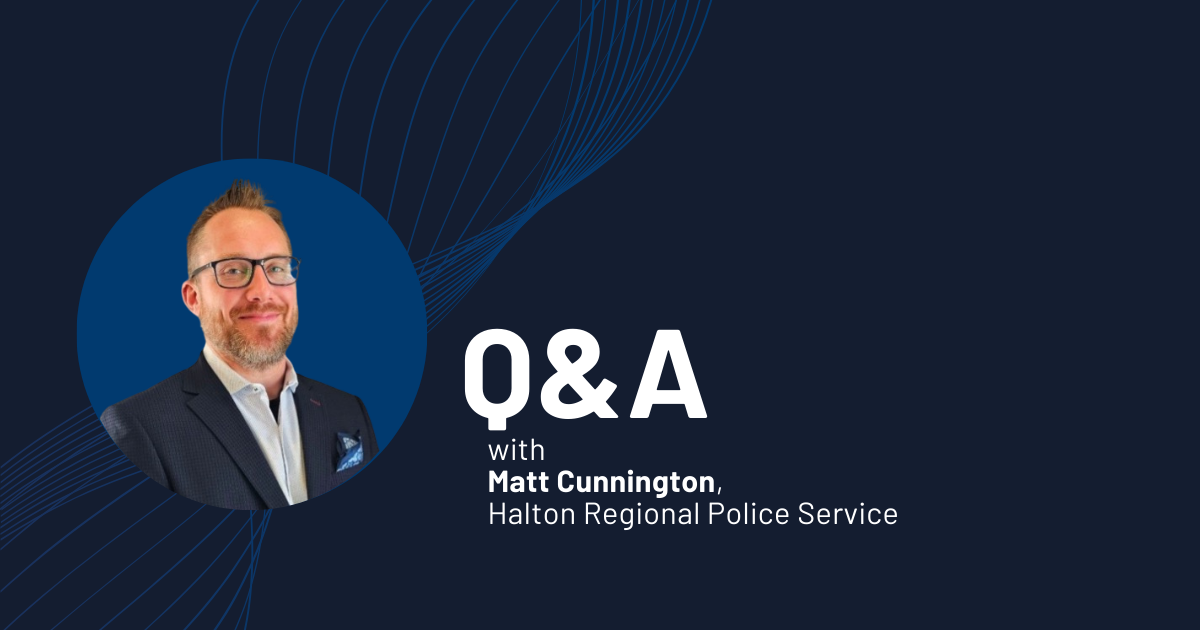
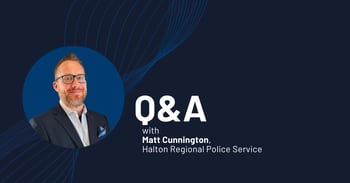
Detective Constable Matt Cunnington has over 23 years of law enforcement experience and currently serves in the Financial Crimes Unit at the Halton Regional Police Service, where he investigates complex financial crime and fraud. He holds specialized certifications as a Certified Fraud Examiner (CFE), Certified Financial Crimes Investigator (CFCI), and TRM Crypto Fundamentals Certification (TRM-CFC), supporting his work in protecting the public and maintaining trust within the community. His career also includes experience in major crime, child abuse and sexual assault, intimate partner violence, and homicide investigations, bringing a disciplined, detail-driven approach to complex and sensitive cases.
What early warning signs of fraud are commonly overlooked in everyday situations?
One of the earliest and most common warning signs of fraud is the use of urgency and pressure. Once a fraudster has a victim engaged—often on the phone—they work deliberately to keep them from pausing, hanging up, or thinking critically. Victims are frequently told things like, “This offer expires today,” “Your account will be locked,” or “Don’t tell anyone or you’ll make it worse.” The goal is to create panic and force immediate action, leaving little room for reflection or verification.
Another red flag is being asked to make unusual or unconventional payments. Requests for gift cards, wire transfers, or cryptocurrency are especially telling, even when they are framed as a “temporary workaround” or “a faster option.” In many cases, these requests start with smaller amounts to avoid raising suspicion early on, gradually escalating once trust has been established.
Unexpected contact followed by requests for personal information is also a common pattern. Fraudsters may reach out without warning and, after building rapport, begin asking for sensitive details under the guise of verification. Phrases such as “We just need to confirm a few details” can sound routine, but they are often used to extract information that can later be exploited.
Finally, fraud often relies heavily on emotional manipulation. This can take the form of fear, such as threats of legal trouble or account compromise; excitement, including promises of prizes or investment opportunities; or trust, as seen in romance scams or impersonation of authority figures like police or the CRA. When emotions take over, logical thinking can slip into the background, and small warning signs are more easily dismissed or rationalized.
In impersonation cases, how do fraudsters appear legitimate, and what should people verify to confirm someone’s identity?
What we typically see in the Financial Crime Unit is the frequent use of fraudulent identification, most often in the form of an Ontario driver’s licence. Fraudsters have become increasingly sophisticated in how they duplicate these documents. In many cases, the person reviewing the identification can sense that something is not quite right, even if they cannot immediately articulate what the issue is. Fraudsters are skilled at recognizing this hesitation and will often exploit it by applying pressure to move the interaction forward.
A common example of this can be seen in account takeover scenarios. A fraudster may approach a bank teller while presenting fraudulent identification. The teller might notice something feels off and instinctively pause, but without a clear reason to stop the transaction. At that point, the fraudster may escalate the situation by creating a sense of urgency, becoming visibly frustrated, or appearing angry. The teller, feeling the pressure of the situation and possibly concerned about a customer complaint or causing a delay, may rush the transaction and override their initial instincts.
The most effective way to confirm whether identification is fraudulent is through the use of a verification scanner. This type of tool represents a relatively small investment but can prevent significant financial losses. A scanner can quickly validate or disprove the concerns an employee may already have when examining an identification card, providing confidence to pause or stop a transaction when something does not appear legitimate.
What contact methods do fraudsters most often use, and how do those channels shape how the fraud unfolds?
Most of the cases I’ve investigated with my team involve fraudsters cold-calling victims. As noted earlier, these individuals often pose as bank representatives, government officials, or technical support staff. Phone calls are particularly effective because of their personal and direct nature, which allows fraudsters to apply psychological pressure in real time. They can create a sense of urgency, steer the conversation, and manipulate victims into sharing personal information or making payments. When this is combined with caller ID spoofing, the call can appear legitimate, making it more likely that the victim will comply.
Fraudsters are also highly skilled at adjusting their script on the fly based on how a victim responds, which helps the interaction feel more authentic and convincing. These scams tend to be especially effective when the fraudster exploits unfamiliar technology, such as cryptocurrency, and positions themselves as a helpful guide through the process. In many cases, trust is gradually built as the fraudster walks the victim step by step through a transaction, reinforcing the illusion of legitimacy and making it harder for the victim to recognize the situation as fraudulent.
What vulnerabilities do fraudsters look for, and do they tailor their tactics to specific age groups or situations?
Based on my experience, fraudsters most often target individuals aged 60 and over, particularly through investment scams, phishing attempts, and romance scams. This group is frequently targeted because they may have accumulated more financial assets over time and, in some cases, may be less familiar with evolving online threats. Fraudsters deliberately tailor their approaches to appear credible and trustworthy, increasing the likelihood that these scams will succeed.
Emotional vulnerability is another factor that fraudsters commonly exploit. Situations involving widowhood, loneliness, grief, fear, or heightened excitement can impair judgment and make individuals more susceptible to manipulation. Scams such as romance fraud, banking scams, cryptocurrency schemes, lottery scams, and inheritance fraud are often designed to tap into these emotional states, encouraging victims to act quickly or maintain secrecy.
Limited digital literacy and gaps in cybersecurity knowledge can also increase exposure to fraud, particularly when it comes to technical scams. Phishing attempts, tech support scams, and identity theft frequently rely on unfamiliarity with digital tools or processes. When victims are unsure how certain technologies work, fraudsters are able to position themselves as helpers or authorities, further reducing the likelihood that the scam will be questioned.
Have you seen fraud cases that break common assumptions, and what could have prevented them?
Within the past year, a newer scam commonly referred to as “banker’s fraud” has emerged. In this scheme, fraudsters cold-call victims while posing as bank representatives. Using persuasive language and pressure tactics, they convince victims that their debit and credit cards have been compromised. Victims are told that a bank representative will come to collect the cards and are instructed to cut them up and place them in an envelope for pickup. During the call, the fraudsters also obtain the victim’s PIN, which gives them full access to the associated accounts.
In reality, the person collecting the envelope is often an Uber driver who is unaware they are participating in a scam. The driver delivers the envelope to an accomplice, frequently meeting at a public location such as a street corner. Once the cards are in their possession, the fraudsters begin using them almost immediately. In these cases, the financial impact is significant, with average losses per victim ranging between $35,000 and $40,000.
The most effective way to prevent this type of fraud starts with understanding that a bank will never ask for a PIN over the phone. Under no circumstances should a PIN be shared. If someone claims to be calling from your bank, the safest step is to hang up and independently contact the bank using the official phone number listed on the back of your card or on a bank statement. Any phone number provided by the caller should be treated with caution, as it may be part of the scam.
Beyond financial loss, what broader impacts does fraud have on victims?
Victims of fraud often experience significant emotional and practical impacts, including stress, anxiety, and feelings of shame or embarrassment, even though the crime is never their fault. Access to funds may be disrupted, which can make it difficult to pay bills or manage day-to-day expenses. In some cases, fraud can also damage a person’s credit score, affecting their ability to secure loans, mortgages, or certain types of employment.
The effects of fraud can also extend to personal relationships, as victims navigate both the emotional strain and the financial consequences of the crime. Recovery is rarely immediate and often requires considerable time and effort, including contacting financial institutions, working with law enforcement, and closely monitoring accounts for any further suspicious activity. While some victims become more cautious following an incident, others may remain vulnerable and risk being targeted again.
Investigators with the Halton Regional Police Service frequently work alongside the Victim Services Unit to help support individuals affected by fraud. This collaboration helps ensure that victims have access to appropriate resources and guidance as they move through the recovery process.
What actions by victims can make investigations more difficult, and why do some people delay reporting fraud?
One of the biggest concerns we see from an investigative standpoint is when victims continue communicating with the fraudster after the matter has already been reported to police. Victims may feel embarrassed, anxious, or desperate to recover their money and believe they can persuade the fraudster to return the funds. In some cases, they may also attempt to conduct their own “investigation” in an effort to help police. Unfortunately, continued contact often leads to further victimization and can significantly complicate the investigation by alerting the fraudster, altering evidence, or undermining investigative strategies.
Another challenge arises when victims are unfamiliar with the Canadian court process. If charges are laid, a lack of understanding about how the legal system works can lead to confusion, unrealistic expectations, or missteps that may affect the case. Having a clear understanding of the process is important so victims know what to expect and how their actions may impact proceedings.
Finally, embarrassment or fear of judgment can lead some victims to withhold or minimize key details when reporting the fraud. Omitting information—intentionally or unintentionally—can create integrity and credibility issues later in the investigation. If additional details come to light after the fact, it can weaken the overall case and, in some situations, result in charges being withdrawn. Full honesty and transparency are critical when reporting fraud, as complete and accurate information gives investigators the best chance to pursue the matter effectively.
If fraud is suspected, what immediate steps should someone take to reduce harm?
Once fraud is suspected, the most important initial step is to immediately cease all contact with the fraudster and preserve any potential evidence. This includes keeping emails, text messages, phone numbers, names or aliases provided, bank and credit card records, transaction receipts, and any other relevant information. Victims should avoid deleting, editing, or altering files in any way, as doing so can compromise the integrity of the evidence. Maintaining a clear chain of custody is critical to ensure that the information remains reliable and, if necessary, admissible in court.
At the same time, the appropriate authorities should be notified as quickly as possible. This includes contacting local police, financial institutions, credit card companies, and reporting the incident to the Canadian Anti-Fraud Centre. Early notification allows these organizations to take immediate steps to limit further losses, flag suspicious activity, and support any subsequent investigation.
Where possible, victims or witnesses should also be encouraged to provide written or video-recorded statements to police or the relevant investigative body. Detailed statements captured early help preserve accurate recollections of events, timelines, and interactions, which can be crucial as investigations progress. Providing clear, timely, and complete information gives investigators the strongest foundation to assess the incident and pursue appropriate next steps.
What long-term habits or practices meaningfully reduce the risk of fraud?
Proactive awareness is one of the most effective tools for reducing the impact of fraud. Members of the Halton Regional Police Service actively work to educate citizens, community groups, financial institutions, and businesses about fraud prevention. These efforts focus on helping people recognize common tactics, understand emerging risks, and know how to respond if something does not seem right.
When new fraud trends begin to affect the community—particularly those involving multiple victims—the Financial Crimes Unit also issues media releases to raise awareness. These communications are intended to alert the public quickly, share practical prevention advice, and reduce the likelihood of further victimization by ensuring timely and accurate information reaches the community.
How do you expect fraud tactics to evolve, and what should people be more alert to in the future?
One of the most significant trends in recent years has been the increasing use of cryptocurrency in fraud-related activity. As digital currencies become more widely adopted, they are also being used more frequently by fraudsters to move and conceal illicit funds. Cryptocurrency transactions can be difficult to trace and recover, which makes them particularly attractive for criminal activity and places investigators at a disadvantage.
As a result, organizations involved in fraud prevention and investigation should prioritize education and training for their employees on how cryptocurrency works. At present, criminals are often far ahead of prevention efforts in their understanding and use of these tools. Improving awareness of how cryptocurrency is acquired, transferred, and misused can help close this gap and better equip organizations to recognize, prevent, and respond to fraud as these tactics continue to evolve.
This Q&A is provided for general informational purposes only. The views and opinions expressed by [Detective Cunnington] are their own and do not necessarily reflect the views, policies, or positions of any law enforcement agency or government body. Participation in this Q&A does not constitute an endorsement of First Canadian Title Company Limited, its products, or its services.
Insurance by FCT Insurance Company Ltd. Services by First Canadian Title Company Limited. The services company does not provide insurance products. This material is intended to provide general information only. For specific coverage and exclusions, refer to the applicable policy. Copies are available upon request. Some products/services may vary by province. Prices and products/services offered are subject to change without notice.
®Registered Trademark of First American Financial Corporation.



















































-min.jpg?width=350&height=216&name=title-fraud-homeowner-protection-blog%20(1)-min.jpg)
-min-1.jpg?width=350&height=216&name=home-theft-tile-fraud-toronto-blog%20(3)-min-1.jpg)
-min.jpg?width=350&height=216&name=FCT-Leading-Insights-Michael-LeBlanc-ENG_blog%20(1)-min.jpg)
.jpg?width=350&height=216&name=title-insurance-bc-alberta-homeowners-blog%20(1).jpg)




-min.jpg?width=350&height=216&name=tanya-fowler-leading-insights-human-digital-innovation-blog%20(1)-min.jpg)








-min.jpg?width=350&height=216&name=BC-parking-claim-blog%20(1)-min.jpg)


-min%20(1).jpg?width=350&height=216&name=Big-Data-Blog%20(2)-min%20(1).jpg)
-min.jpg?width=350&height=216&name=PropTalk-what-every-home-owner-needs-to-know-Blog%20(2)-min.jpg)

-min.jpg?width=350&height=216&name=Three-signs-your-clients...-Blog%20(1)-min.jpg)