en
en



.png?width=1200&height=630&name=JOURN%C3%89E%20INTERNATIONALE%20DES%20FEMMES%20(6).png)


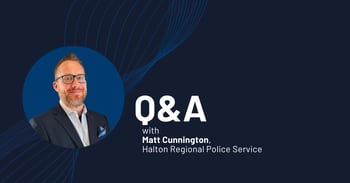
.png "Matt Cunnington, CFE, CFCI, TRM-CFC Financial Crimes Unit, Fraud Project Team, Halton Regional Police Service")
Digital fraud continues to evolve, making it increasingly important to recognize the warning signs and know what to do when something doesn’t seem right. We connected with Detective Constable Matt Cunnington of the Halton Regional Police Service to share his perspective from the field on how people can recognize, respond to, and report digital fraud. With more than 23 years of law enforcement experience and specialized expertise in financial crime and fraud investigations, Matt offers practical advice on what to watch for—and what to do if fraud reaches you.
As a fraud investigator, one of the most common questions I am asked is how people can protect themselves from digital fraud. While technology continues to evolve, fraudsters often rely on the same tactics: creating urgency, exploiting trust, and convincing people to act before they have time to think.
While every fraud is different, the response is often the same: recognize the warning signs, secure your accounts, preserve evidence, report the incident, and protect yourself going forward.
1. When should you stop an interaction?
Fraudsters often succeed by creating urgency or fear. If an interaction pressures you to take immediate action, stop and independently verify what is happening.
Whether it begins with a cold call, text message, or email, pay attention when something doesn't seem right. In my experience, there are very few situations involving fraud that constitute a genuine emergency. Fraudsters rely on emotional reactions to prevent people from verifying the information they are given.
For example, you receive a call from someone claiming to be from your bank. They say your bank card is being used fraudulently and ask you to confirm your card number, CVV, PIN, or online banking credentials. This is a significant red flag.
Your bank will never ask you to disclose your PIN, security codes, or complete card details over the phone. Simply say, “I'm going to call the bank back.” If the caller pressures you to stay on the line, you can be confident you are dealing with a scam.
Do not rely solely on caller ID. Fraudsters can manipulate it to appear as though a call is coming from a trusted organization. End the call and contact the organization using a phone number from its official website, account portal, or correspondence.
If a request is legitimate, it will still be legitimate after you take a few minutes to verify it. Pause, think, and verify.
2. What should you do if you think an account or identity has been compromised?
One of the biggest mistakes I see is people delaying action because they are unsure whether a compromise has occurred. If you suspect an account, device, or your identity has been compromised, act quickly.
Start by securing affected accounts. Freeze debit or credit cards if necessary, change compromised passwords, and use a unique, strong password for every account. Enable multi-factor authentication (MFA), sign out of active sessions, and review account activity for unauthorized access or transactions.
Personally, I log into my bank account two or three times a day. That may be excessive for some people, but regularly reviewing your accounts can help you quickly identify suspicious activity.
Notify the appropriate organizations. Depending on the situation, this may include your bank, your employer's IT department, and the major credit bureaus, Equifax and TransUnion.
Remember that the risk may continue after the fraud is discovered. Stolen information can be reused later. If you experience financial losses, identity theft, fraudulent accounts opened in your name, or other criminal activity, contact your local police service. You can also report fraud to the Canadian Anti-Fraud Centre.
Don't wait for confirmation before taking action. Secure your accounts, notify the appropriate organizations, and document what occurred.
3. What information should you preserve?
One of the first things I tell victims of fraud is to preserve everything. Details that seem unimportant can become valuable evidence during an investigation.
Save emails, text and social media messages, screenshots, phone numbers, usernames, cryptocurrency wallet addresses, e-transfer details, banking records, transaction confirmations, and relevant website addresses. Even small details may become important when combined with other reports.
Avoid deleting messages, blocking phone numbers, or discarding receipts until you have saved copies for your records.
Once you suspect fraud, cease contact and do not attempt to investigate the matter yourself. Continuing the conversation may provide the fraudster with more information or create opportunities for further loss. Focus instead on preserving evidence, securing your accounts, and reporting the incident.
Fraud investigations are often built from small pieces of information. When in doubt, save it.
4. What happens when you report digital fraud?
People often ask whether reporting fraud makes a difference. The answer is yes. A report may not result in an immediate arrest or recovery of funds, but it can provide intelligence that helps identify suspects, uncover larger fraud networks, and support ongoing investigations.
Provide as much information as possible, including communications, screenshots, phone numbers, usernames, website addresses, transaction records, dates and times, and details of financial losses. Investigators can use this information to establish timelines, identify links between victims, and trace funds or communications.
The device itself may also contain evidence. If you are not comfortable securing digital evidence, avoid making unnecessary changes. Disconnect the device from the internet by disabling Wi-Fi, placing it in Airplane Mode, or otherwise isolating it from network connections. If possible, leave it powered on and store it safely until it can be examined.
Continuing to use the device, installing software, or conducting your own investigation could unintentionally overwrite information.
If further examination is warranted, investigators may seek your consent to have a Technological Crime Unit or digital forensic team examine the device and preserve relevant evidence.
Every report contributes to the larger effort to identify offenders, understand emerging threats, and protect others.
5. What can you do going forward?
Protecting yourself online does not require you to be a cybersecurity expert. I certainly am not. Some of the most effective safeguards are simple habits practised consistently.
Use strong, unique passwords, enable MFA wherever possible, and keep your devices and applications updated.
Be cautious about what you share online. Fraudsters can gather information from social media, public profiles, and data breaches to make scams more convincing. Consider how personal information could be used to impersonate you or target you in future schemes.
Regularly review your financial accounts and credit activity, and consider enabling transaction alerts through your financial institution.
Artificial intelligence and voice-cloning technology create another risk. We have seen scams where a caller sounds like a family member or close friend and claims to need money urgently. One precaution I have implemented with my family is a code word that only we know. If something seems off, we use it to verify the person's identity.
Above all, be cautious of unexpected requests for money or personal information. Take the time to verify before you trust, especially when urgency is involved.
6. What are the current fraud trends affecting our community?
Two scams currently generating reports and investigations within the Financial Crimes Unit demonstrate many of these warning signs.
The first is a remote-access scam involving software such as AnyDesk. A fraudster impersonates a trusted organization and convinces the victim to install remote-access software because of an urgent issue. Once access is granted, the fraudster may control the device, access online banking, steal personal information, or direct the victim to transfer funds. AnyDesk itself is a legitimate tool, but criminals may misuse it to facilitate fraud.
The second is the fake agent scam. Criminals pose as representatives of legitimate cellphone providers and offer discounted plans, upgrades, or complimentary devices. They obtain enough information to access or modify the victim's account and order expensive devices in their name.
Once the devices arrive, the scammers claim there was a shipping error and instruct the victim to return them using a shipping label or QR code controlled by the suspects. The victim sends away the devices but remains responsible for the financing agreements, service contracts, and charges.
The Halton Regional Police Service recently issued a media release warning residents about this type of fraud, which you can read here.
Cybercriminals are constantly evolving, but the fundamentals remain the same. Use strong passwords, enable MFA, keep your devices updated, monitor your accounts, and think critically before acting. Most importantly, if something doesn't feel right, trust your instincts, slow down, and verify.
This Q&A is provided for general informational purposes only. The views and opinions expressed by [Detective Cunnington] are their own and do not necessarily reflect the views, policies, or positions of any law enforcement agency or government body. Participation in this Q&A does not constitute an endorsement of First Canadian Title Company Limited, its products, or its services.
Insurance by FCT Insurance Company Ltd. Services by First Canadian Title Company Limited. The services company does not provide insurance products. This material is intended to provide general information only. For specific coverage and exclusions, refer to the applicable policy. Copies are available upon request. Some products/services may vary by province. Prices and products/services offered are subject to change without notice.
®Registered Trademark of First American Financial Corporation.



























-min.jpg?width=350&height=216&name=title-fraud-homeowner-protection-blog%20(1)-min.jpg)
-min-1.jpg?width=350&height=216&name=home-theft-tile-fraud-toronto-blog%20(3)-min-1.jpg)
-min.jpg?width=350&height=216&name=FCT-Leading-Insights-Michael-LeBlanc-ENG_blog%20(1)-min.jpg)

-min.jpg?width=350&height=216&name=tanya-fowler-leading-insights-human-digital-innovation-blog%20(1)-min.jpg)







-min.jpg?width=350&height=216&name=Three-signs-your-clients...-Blog%20(1)-min.jpg)


-min.jpg?width=350&height=216&name=Blog-French-FCT-Real-Estate-Fraud_v2%20(1)-min.jpg)